 Iceland Fishing Tours
Fishing License in Iceland: Fishing Card, River Permits and Gear Rules
A fishing license in Iceland is not one document. There are three routes: a Fishing Card for lakes, a beat permit for rivers and no permit at all for sea fishing with a rod for your own consumption. The cheapest freshwater entry is the Veiðikortið card at $81 (9,900 ISK), and every guided tour listed on this site supplies both the permit and the gear.
Quick answer Card price, river permits, sea rules and the disinfection step in one pass
Freshwater fishing in Iceland always needs a permit. For lakes, the Veiðikortið Fishing Card costs $81 (9,900 ISK), is valid only for 2026 and covers dozens of lakes but no rivers. Rivers are privately managed limited-rod fisheries and need a beat permit from the rights holder, from $21 (2,500 ISK) a day at Þingvellir up to much more on prime salmon water. Sea fishing with rods and hand reel line for your own consumption needs no permit, and used tackle must be disinfected with a certificate before it enters Icelandic fresh water.
Key takeaways
- Lakes: the 2026 Fishing Card is $81 (9,900 ISK), one eCard per order, valid for 2026 only
- Rivers: buy a beat permit from clubs, landowners or outfitters, the card never covers rivers
- Þingvellir day permit is $21 (2,500 ISK) per rod, shore only, or skip the paperwork on a guided lake and river fishing day where permits are included
- Sea: no permit needed for rod fishing for own consumption, and sea angling tours carry the vessel permit for you
- Used gear needs a disinfection certificate, Virkon-S 1% or 70-85% alcohol, vet-signed
Which Permit Do You Need
The answer depends entirely on where you fish. Water in Iceland is either lake, river or sea, and each has its own system.
The Three Routes
Lakes are the simplest. The Veiðikortið Fishing Card covers dozens of lakes around the country for one calendar year. Rivers are different. Every Icelandic river is privately managed, so a permit from the rights holder is required before casting. Rivers are limited-rod fisheries, meaning a fixed number of rods are sold per beat per day, and the card does not cover any river. The sea is the easiest of all: rod and hand reel fishing for your own consumption needs no permit, though the catch cannot be sold.
One warning from the land side. Fishing anywhere needs the landowner's express permission, and net fishing is fading out in rivers and lakes, with a near-total ban expected. If you have no permit in your pocket, you have no right to stand at the water.
Permit Decision Table
This table compares the main permit types side by side. Costs come from the operators and authorities named in each section below. Pick your row, then follow the where to buy column.
| Where you fish | What you need | Cost | Where to buy |
|---|---|---|---|
| Card lakes (Elliðavatn, Kleifarvatn, Hítarvatn and more) | Veiðikortið Fishing Card eCard | $81 (9,900 ISK) for 2026 | Veiðikortið web shop, gas stations |
| Þingvellir National Park shore | Day permit or the card, Kárastaðir excluded | $21 (2,500 ISK) per rod per day | Leirar service centre or online via Þingvellir |
| Elliðavatn and other club waters | Day rod from the club | 3,500 ISK full day at Elliðavatn | Veiðiheimar and SVFR |
| Salmon rivers | Beat permit, limited rods | 40,000-220,000 ISK a rod day on Ytri-Rangá, lodge weeks from $4,839 (£3,620) | Angling clubs, landowners, outfitters, island.is angling page |
| Sea, shore or tour boat | None for rods and hand reel line, catch not for sale | No permit | No purchase needed, book a sea tour for gear included |
If You Would Rather Not Deal With Permits
Guided tours remove the paperwork. The private lake and river fishing tour from Reykjavik includes permits, rods and transport, with a guide teaching fly casting through Þingvellir country. On the sea side, every listed boat from the $100 whale and angling combo at Hauganes to the Special Tours evening trip on Faxaflói sails under a vessel permit and supplies tackle. See them all side by side on Iceland fishing tours. Winter anglers can take the Akureyri ice fishing tour, which bundles the fishing licence, rods, hot cocoa and transport to the frozen lake.
Source: Veiðikortið web shop, Wildline Fishing, island.is.
What You Can Catch by Water Type
The permit you buy decides the water, and the water decides the fish. Here is what each route puts on the end of your line.
Lakes, Rivers and Sea Compared
Iceland's freshwater season runs from April to September. The sea needs no permit for a rod. This table sets the common species against the three routes, so you can match the fish you want to the permit you need.
| Water | Common fish | Permit |
|---|---|---|
| Lakes | Arctic char, brown trout | Fishing Card or lake day permit |
| Rivers | Atlantic salmon, brown trout, Arctic char | Beat permit from the rights holder |
| Sea | Atlantic cod, haddock, pollock, catfish | None for rod and hand reel line |
Seasons, Salmon and the Fish to Release
Salmon are mainly a summer fish, so a river trip planned for April will find the beats quiet. Lake char and trout are the better bet at the start and end of the season.
Lagarfljót in the east is a glacial river with brown trout and char. Visibility in that glacial water is poor.
Atlantic halibut is the one sea fish to treat with care. It is endangered, and any you hook should go back in the water. For a boat trip where the crew lands, cleans and grills the legal catch, see the sea fishing tours. If rivers are your goal, the salmon fishing and trout fishing guides cover each species in depth.
Source: Guide to Iceland.
The Veiðikortið Fishing Card
Veiðikortið is the one-card answer for lake anglers. It is sold as an email-delivered eCard and covers a long list of lakes across all four regions.
Price, Validity and the eCard
The Veiðikortið 2026 eCard costs $81 (9,900 ISK). It is valid only for 2026 and does not permit fishing in rivers. One eCard comes per order, so a family of three buys three separate orders. The card arrives by email as a QR code to add to Apple or Google Wallet.
For the ID number field, foreign visitors can use their passport number, skipping the letters, or the fallback 010101. A plastic card mailed to a home address is a separate product if you prefer something physical.
Lakes count is a genuine three-way tangle. The card's own site lists 36 fishing areas in four regions, South 11, North 8, West 12 and East 5. The shop headline says 38 lakes, and another source says over 36. The counts differ by year, so trust the shop figure at purchase. Most lakes open on 1 May and close on 30 September, though some open all year.
Named Lakes and Where to Buy
The card covers named waters including Elliðavatn, Þingvallavatn with Hagavík, Úlfljótsvatn, Kleifarvatn, Meðalfellsvatn and Frostastaðavatn in the South. In the North there are Svínavatn, Ljósavatn, Vestmannsvatn and Æðarvatn. The West list holds Hítarvatn, Hlíðarvatn, Langavatn, Haukadalsvatn and Hreðavatn, and the East has Skriðuvatn, Sænautavatn and Urriðavatn. A brochure with maps and directions comes with the card, written in Icelandic with basic English.
Buy online from the Veiðikortið web shop. Gas stations sell the card too, and a rental company page adds N1, Olís, tackle stores and post offices as outlets. If you want a guided day instead, the lake and river tour includes its own permits.
Children and Showing the Card at the Lake
Children under 14 fish free when accompanied by a card holder. Note that one tourism site still quotes a stale 6,900 ISK price for the card, and a camper-rental page quotes about €70. The shop price of $81 (9,900 ISK) is the figure to use, and the other numbers are out of date.
At each lake the holder must register with the landowner or show the card to the warden. At some lakes, including Þingvallavatn and Elliðavatn, the card must be visible on the car dashboard, so print the eCard from your confirmation email and leave it under the windscreen.
Source: Veiðikortið web shop, Veiðikortið, Nat.is.
Fishing Card Lakes by Region
The card is easier to use once you know which part of the country each lake sits in. Pick the region you will be driving through, then choose lakes from that row.
Lakes Grouped by Region
The Fishing Card menu groups its areas into four regions: 11 in the South, 8 in the North, 12 in the West and 5 in the East, 36 in all. A Nat.is guide splits the same waters into six regions and adds the Southwest and the Westfjords. The table below follows that six-way split and shows only waters named by those two sources.
It is a sample, not the full list, so check the card's own site before you plan a route around one lake.
| Region | Named lakes | Count on the card site |
|---|---|---|
| Southwest | Kleifarvatn, Meðalfellsvatn, Elliðavatn | Not split out |
| South | Úlfljótsvatn, Þingvallavatn, Gíslholtsvatn | 11 |
| West | Baulárvallavatn, Haukadalsvatn, Hítarvatn region, Langavatn | 12 |
| Westfjords | Sauðlauksdalsvatn, Syðridalsvatn, Vatnsdalsvatn | Not split out |
| North | Svínavatn, Ljósavatn, Vestmannsvatn, Æðarvatn | 8 |
| East | Skriðuvatn, Sænautavatn, Urriðavatn | 5 |
Using the Brochure and Planning a Route
The card comes with a brochure of maps and directions. It is written in Icelandic with basic English. A PDF copy sits under the card info tab on the Veiðikortið web shop, so you can read it on your phone before you buy.
For a first trip, stay in one region and fish two or three lakes from it. If you want one fishing day with no map reading at all, the lake and river fishing tour handles the water, the permit and the gear.
Source: Veiðikortið, Nat.is, Veiðikortið web shop.
Lake and Park Day Permits
If a single lake suits you better than a country-wide card, buy that lake's day permit. Two of the best-known waters near Reykjavik have clear published prices.
Þingvellir National Park
The Þingvellir day permit costs $21 (2,500 ISK) per rod. It is sold at the Leirar service centre in the park and online. The season runs from 20 April to 15 September and the fishing is shore only, since boats are prohibited on the national park land. Kárastaðir is excluded from this permit and from the Fishing Card alike, so that stretch needs separate rights.
Veiðikortið also works in the park, so card holders can fish here without buying the day permit, again excepting Kárastaðir. Children fish free at Þingvellir when accompanied by an adult, provided at least one valid permit has been purchased. The lake's brown trout average about 8 lb with fish to 36 lb reported by outfitters, and the peak window for the biggest fish runs mid-May to mid-June. Every fish kept or released must be logged electronically on the Hafró website.
Elliðavatn and Other Club Waters
Elliðavatn, at the edge of Reykjavik, costs 3,500 ISK for a full day. The season runs 24 April to 15 September with fishing hours 07:00 to midnight. Fly, worm or spinner are all allowed, there is no quota, and the Hólmsá stretch is fly only. No fishing is allowed in the Suðurá or within 50 m of the dam, and boats are banned without landowner permission. Children under 12 and pensioners fish free here.
Elsewhere, angling clubs and the Veiðiheimar booking site sell day rods on dozens of lakes and small rivers. Expect the same pattern: a published day price, a stated season and rules on methods. If you prefer a rod in your hand with none of this to arrange, the guided lake and river day from Reykjavik covers permits and gear.
Source: Þingvellir National Park, Veiðiheimar, Veiðiheimar.
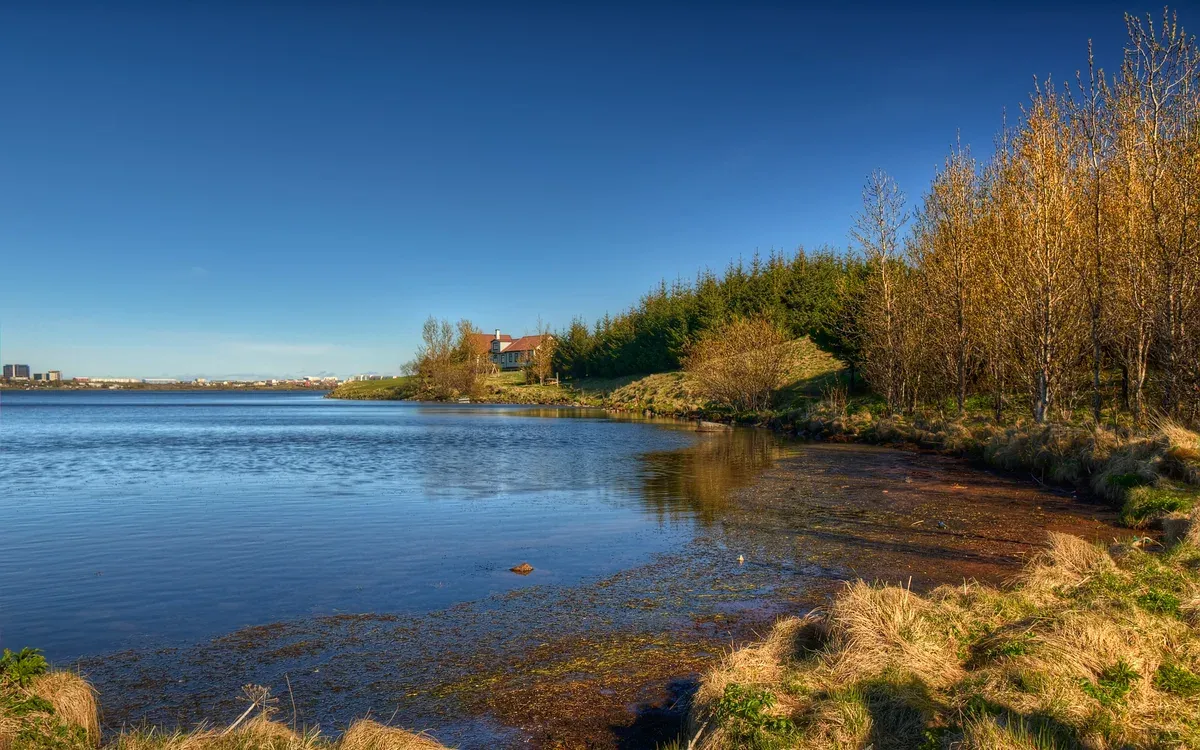
Elliðavatn, the lake on the edge of Reykjavik where a full day costs 3,500 ISK. Photo: Axel Kristinsson from Reykjavík, Iceland, CC BY 2.0, via Wikimedia Commons
Salmon River Beat Permits
Rivers are where Icelandic permits get serious. Each river sells a fixed number of rods on defined beats, and prices range from modest to eye-watering.
How River Permits Work
Every Icelandic river is privately managed, so a permit from the rights holder is required before casting. Rivers are limited-rod fisheries, which means your permit buys a beat and a share of the daily rod count. A permit also funds conservation work on the river. The Fishing Card never covers rivers, so no matter how many cards you buy, a river needs its own permit.
Permits are sold by angling clubs, landowners and lessees. Day rods in Icelandic krona are listed on Veiðiheimar, the SVFR club handles Elliðaár and other club waters, outfitters sell lodge weeks, and the Federation of Icelandic River Owners lists permit contacts.
Rod season on salmon rivers runs at most 105 days within 20 May to 30 September, though most rivers open late June. Fishing hours are regulated in two sessions, typically 07:00 to 13:00 and 16:00 to 22:00, with no night fishing.
What a Rod Day Costs
Day rod prices vary hugely by river quality. The table below lists the published sample prices from the Veiðiheimar bookings, and they make the pecking order obvious. Elliðavatn is the cheap taster, Laxá í Mývatnssveit sits in the premium trout bracket, and Ytri-Rangá spans 40,000 to 220,000 ISK depending on the beat and the date. Compare that with the sea tours from about $100 where the permit, boat and crew come included.
Catch limits are set river by river. Laxá Mývatn allows two trout per shift with release of fish under 35 cm and over 60 cm. Hvítá-Iða allows one salmon under 70 cm a day. Leirvogsá allows four fish per rod a day, Eystri-Rangá three small grilse per shift, Ytri-Rangá releases female salmon of 68 cm and up, and Eldvatn releases all sea trout.
| River | Day rod price |
|---|---|
| Elliðavatn | 3,500 ISK |
| Kaldárhöfði | 5,900-11,990 ISK |
| Skaftá Hólma | 10,000-15,000 ISK |
| Laxá Aðaldal | 17,200 ISK per half day |
| Eldvatn | 25,000-40,000 ISK |
| Litlaá | 45,000 ISK |
| Laxá í Mývatnssveit | 65,200-72,500 ISK |
| Ytri-Rangá | 40,000-220,000 ISK |
Booking a Beat
For prime salmon water, multi-day packages rather than day rods are the norm. Stóra Laxá last-minute 2026 slots run from £4,650 ($6,216) per rod in mid-August to £5,800 ($7,753) in mid-September, and past seasons quote about £3,620 ($4,839) per rod for a self-catering unguided week on Fnjóská. Fixed rod counts apply, for example 16 rods on West Ranga, 12 on Nordurá and 6-10 on Miðfjarðará. A guide is recommended even for one day on an unfamiliar river, and rod sharing keeps costs down. Guided lodge programs from several outfitters state that licences are included in the price.
Source: Wildline Fishing, Veiðiheimar, island.is.
Catch and Release, Rented Rods and What to Bring
A permit lets you cast. It does not say what you may keep or what to pack. These three points are worth settling before the trip.
Catch and Release Is Often Required
Catch and release is strongly encouraged across Iceland and is mandatory in many places. Some areas of Þingvallavatn are catch and release only. The rule is set by the water, not by the national permit, so read the terms on your permit slip or ask the seller before you put a fish in the bag.
A simple habit helps. Treat every fish as a release fish until you have confirmed the water allows a kept one. The per-river catch limits already described above still apply on top of any release rule.
Net fishing is a separate matter. One guide notes that salmon net fishing runs only from Tuesday to Friday, is limited to fresh water in the June to September salmon season and is not allowed in a river where someone is fly fishing. It is also being phased out, so an angler will rarely meet it.
Renting a Rod and What You Still Bring
Some outfitters rent rods and reels, which saves carrying a long tube through airport security. Ask when you book, since not every seller keeps rental tackle in stock.
You supply your own flies and lures. Pack a small box of flies or lures matched to the species you want.
If you bring your own gear, remember that anything used abroad must be cleaned and sterilised before it touches Icelandic fresh water. The full method and the places that disinfect are set out in the gear disinfection section further down this page. Rental tackle from an Icelandic outfitter avoids that step. So does a guided trip, because the guide provides the rods and permits. See the fly fishing guide for what to put in the fly box.
Source: Guide to Iceland.
Sea Fishing Rules
The sea is the one water where Iceland asks no permit of the visiting angler. The rules that exist are about how you fish and how much a vessel may land.
No Permit, Few Rules
Sea fishing for your own consumption with rods and hand reel line, without an automatic jigger, needs no permit. The catch cannot be sold, and landowners' rights still apply where you launch from shore. That is essentially the whole rulebook for a shore rod, which makes sea fishing the cheapest legal fishing in the country.
Tour vessels operate under a different scheme. A boat fishing without catch quota carries a 22,000 ISK per-vessel permit, and its limits are set per vessel, not per person: 7 rods and 49 fish a day under 20 passengers, 15 rods and 60 fish with 20 to 49 passengers, and 25 rods and 75 fish above 50. The catch stays off the market. Vessels with quota may land up to 10 tons, all weighed.
What You Catch and What You Release
Reykjavik bay trips in Faxaflói give a good chance of cod, haddock, pollock and rockfish, and the crew grills the edible catch on board. Atlantic halibut is endangered and should be released if you hook one. Most tours let you keep what you catch, and the crew cooks part of it on board.
Halibut and the Tour Shortcut
Atlantic halibut is endangered and should be released if caught, so let the big flat fish go. For everything else, the simplest route for a visitor is a listed tour. The sea fishing and BBQ tour supplies rods, tackle and protective clothing, and grills the catch on deck. The traditional small-boat trip caps at 12 passengers with hotel pickup. Viggson Sailing's guided angling trip on the Jóhanna sails a traditional boat with an indoor cabin, and the whale watching and angling combo at Hauganes pairs fjord whales with an angling stop from $100. On every one of these the vessel permit is the operator's problem, not yours.
Source: island.is, Guide to Iceland.
Gear Disinfection Step by Step
Iceland protects its rivers from imported fish diseases. Any tackle used abroad must be disinfected and certified before it touches Icelandic fresh water.
Who Needs It and What It Covers
Used fishing equipment must be disinfected before use in Icelandic rivers and lakes, and a certificate must be shown before the tackle is used. The rule covers rods, reels, hooks, lures, flies, waders and nets. Buying a brand-new rod in Iceland sidesteps the issue, since all truly new unused sport fishing gear, including new unused flies, is exempt, as are kayaks, small boats, diving suits and gear used only in Greenland. MAST's exemption notice also lists deep-sea fishing gear, and tour operators supply the rods, so a sea angling tour should need no certificate.
Gear sent by post arrives with a notice to disinfect before use, so the obligation follows the parcel.
The MAST Process
The Icelandic Food and Veterinary Authority, MAST, publishes the method. Clean all dirt off first. Then spray Virkon-S 1%, which is 10 g or 2 tablets per litre, or 70-85% alcohol over all surfaces. Spraying a rod shaft is enough for the rod. For reels and hook boxes, spray and rinse after about 10 minutes. Hooks, vests, shoes and waders should be sprayed or dipped, then kept in a plastic bag for about 10 minutes.
Do this at home where possible. Disinfection by a vet or recognised body in your country before export is the preferred route, and the vet or recognised body issues the certificate, not MAST. Customs accepts a certificate from an authorised vet, so keep it with your luggage.
Costs and Where to Disinfect in Iceland
Did you arrive without a certificate? Several fixes exist. In Iceland, angling associations and river owners can disinfect gear, and services run at Keflavík, Akureyri and Egilsstaðir airports. The Þingvellir Leirar service centre disinfects for 5,000 ISK, while Battle Hill Lodge does it free and a fee may apply at Keflavík. MAST publishes no fee of its own. Airport disinfection takes about 15 to 20 minutes, so allow the time. Confirm the current arrangement with the airport desk when you land.
One more route avoids all of this. The private lake and river fishing tour supplies its own gear and permits, and the Akureyri ice fishing tour includes rods and licence, so your own tackle never leaves the bag. Every bookable trip is compared on one page under Iceland fishing tours.
Source: MAST, Skatturinn, Þingvellir National Park.
Drones, National Parks and Taking Fish Home
Two smaller questions trip up travelling anglers: can you fly a drone over the fishing spot, and can you take the fillets home. The answers are less settled than the permit rules.
Drones and Park Rules
In Vatnajökull National Park recreational drones are allowed but no special permits are issued, and bans apply in zones such as Skaftafell and Jökulsárlón during nesting season. A general altitude limit of 120 m (394 ft) appears in travel guidance. For Þingvellir, guides disagree and no official drone rule was found for the park itself, so confirm with the park rangers at Leirar before you launch. The safe habit is to check each park's own rules before every flight, since zones and seasonal bans change.
Remember that Þingvellir is also shore-only fishing water and boats are prohibited, which applies to any floating camera platform just as much as to a fishing boat.
Logging Your Catch
At Þingvellir every fish, kept or released, must be logged electronically on the Hafró website. Hafró uses these logs for national catch statistics, which recorded 46,962 trout and 34,186 salmon in 2025. If you fish the park, log before you leave the water.
Other rivers and lakes set their own reporting rules, and your permit seller will state them.
Taking Fish Home
No Icelandic rule on exporting a tourist's recreational catch was found in official sources, so there is no published cap to quote. Anglers report taking frozen fillets home in insulated boxes. The practical move is to ask your lodge or boat operator about packing and any quota their catch sits under, since they handle it every week. Note that the duty-free allowance of 10 kg of food and ISK 25,000 that Skatturinn publishes covers imports into Iceland, not exports from it, and bars meat and dairy from outside the EEA.
On most listed tours you keep what you catch, and the crew will fillet it for the grill on board. If the fish matters more than the paperwork, the lake and river day allows up to two kept fish.
Source: Vatnajökull National Park, Þingvellir National Park, Skatturinn.
Fishing License Questions
Is there fishing for tourists in Iceland?
Yes, and plenty of it. Lake fishing is open to anyone holding the $81 (9,900 ISK) Fishing Card, river fishing is open by beat permit from clubs, landowners and outfitters, and sea rod fishing needs no permit at all. Guided day tours bundle permits with gear and transport, and tours run from Reykjavik, Akureyri and Hauganes across lake, river, sea and ice fishing.
How much does it cost to fish in Iceland?
The Fishing Card costs $81 (9,900 ISK) for 2026. A Þingvellir day permit is $21 (2,500 ISK) per rod, Elliðavatn is 3,500 ISK a day, and river beats run from about 10,000 ISK to 220,000 ISK a rod day depending on the river. Sea fishing is free with your own rod. Multi-day prime salmon packages run from £3,620 ($4,839) per rod upward.
Can foreigners buy a fishing license in Iceland?
Yes. The Fishing Card is sold online to anyone, and foreign visitors can enter their passport number, skipping the letters, or 010101 in the ID field. The eCard arrives by email as a QR code for Apple or Google Wallet. River permits are likewise open to visitors through Veiðiheimar, the SVFR club and outfitters.
What fish can you catch in Iceland?
Fresh water holds brown trout, Arctic char, Atlantic salmon and sea trout, with Þingvallavatn famous for brown trout averaging about 8 lb. At sea the common catch is cod, haddock, pollock and rockfish, and Atlantic halibut, which is endangered, must be released. Ice fishing through the winter targets char and brown trout on frozen lakes near Akureyri.
What is the most common fish caught in Iceland?
In the 2025 rod catch statistics the most numerous were brown trout at 46,962, then salmon at 34,186 and char at 29,120. On Reykjavik sea tours, cod and haddock head the expected catch list, with pollock and rockfish close behind.
Does the Fishing Card cover rivers and salmon fishing?
No. The card is valid for lakes only and explicitly does not permit fishing in rivers. Every Icelandic river is privately managed, so you need a separate beat permit from the rights holder before casting, whether for salmon or trout. Day rods are listed on Veiðiheimar from 3,500 ISK at Elliðavatn upward.
Do children need a fishing permit in Iceland?
Children under 14 fish free when accompanied by a Fishing Card holder. At Þingvellir, children fish free with an adult as long as one valid permit has been purchased, and at Elliðavatn children under 12 and pensioners fish free. Check the rule for any other water before you go, since it is set per permit.
Do I need to disinfect my fishing gear for Iceland?
Yes, if it has been used abroad and you plan to fish fresh water. Disinfect with Virkon-S 1% or 70-85% alcohol and carry a certificate from a vet or recognised body. New unused gear is exempt, and sea tour tackle is supplied by the operator, so no certificate is needed for a sea angling trip.
Is there a minimum age for an Iceland fishing license?
No single minimum age is published. The rule is set by each permit. Children under 14 fish free with a Fishing Card holder, children fish free at Þingvellir with an adult if one permit is bought, and at Elliðavatn children under 12 and pensioners fish free. Check the terms of the water you plan to fish.
Is there a map of the Iceland Fishing Card lakes?
Yes. The card comes with a brochure of maps and directions, in Icelandic with basic English. A PDF copy sits under the card info tab on the Veiðikortið web shop page. The card's own site also lists its areas by region: 11 in the South, 8 in the North, 12 in the West and 5 in the East.
Is catch and release required in Iceland?
Often, yes. Catch and release is strongly encouraged and mandatory in many places, and some areas of Þingvallavatn allow release only. The rule depends on the water, so read the terms on your permit or ask the seller before keeping a fish.
Can I rent a fishing rod in Iceland?
Some outfitters rent rods and reels. You bring your own flies and lures. Ask the outfitter when you book, because not all keep rental tackle. Your own gear must be cleaned and sterilised before use in fresh water, so rented tackle also saves you the disinfection step.