 Iceland Fishing Tours
Sea Fishing in Iceland: Deep Sea Angling, Boats and Rules
Sea fishing in Iceland needs no permit for anyone fishing with rod and hand line for their own table. Booked boat trips run from about $100 per seat, and Reykjavik tours fish Faxaflói Bay from May to September. This guide compares the boats, the species, the seasons and the rules across the whole country.
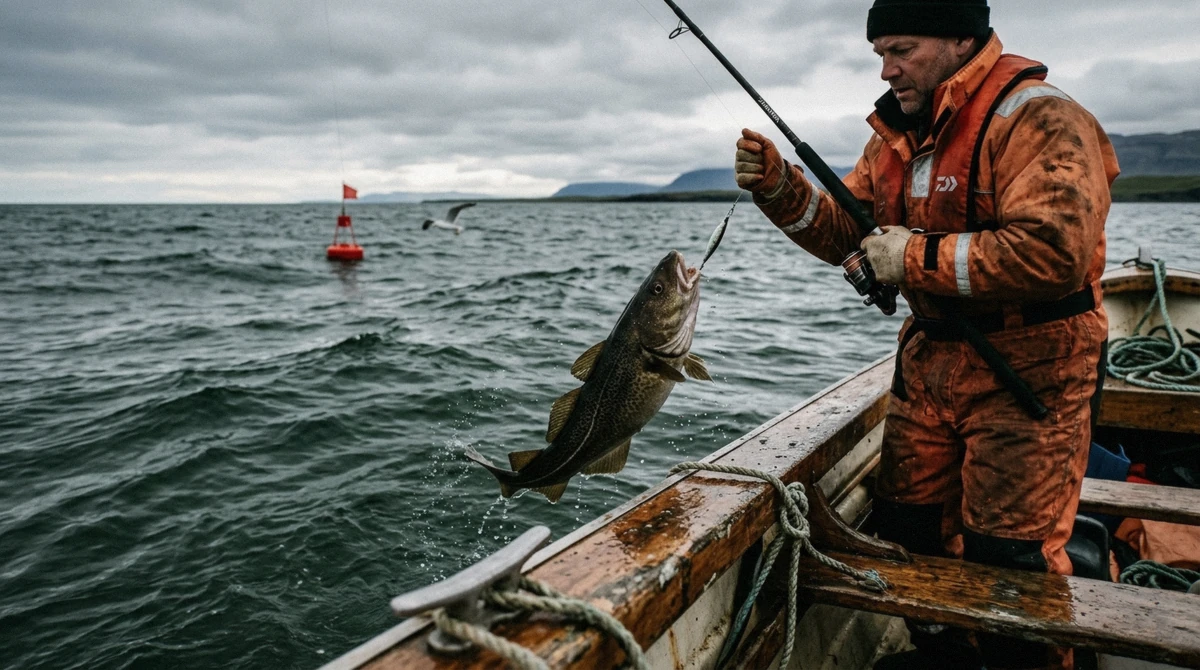
Quick answer Prices start near $100 a seat and no sea permit is needed
Sea fishing in Iceland is open to everyone with rod and hand line for their own table, with no permit and no fee. The bookable trips compared here run from $100 for whales and angling at Hauganes to $162-$188 for 2.5 to 3.5 hours on a Reykjavik boat with the catch cooked on board. Most trips run May to September, and some North Iceland boats angle on request all year.
Key takeaways
- No permit is needed to fish at sea with rod and hand line for your own use, and the catch cannot be sold
- The cheapest listed seat is the whale watching and sea angling combo in Hauganes at $100
- Reykjavik boat trips run about $162 to $188 for 2.5 to 3.5 hours with the catch cooked on board
- Peak season is May to September, and Westfjords cod peaks April to June
- Freshwater fishing has different rules, see the Iceland fishing licence guide
What You Catch at Sea
Iceland's inshore grounds hold cold-water species that fight hard and eat well. Tour boats name the same handful of fish on nearly every page.
The Common Species
Cod is the headline fish. Atlantic cod often runs a metre or more long, and the largest ever recorded weighed 96 kg (211 lb). On a Reykjavik tour out of Faxaflói Bay you have a good chance of cod, haddock, rockfish and pollock, and one listing adds mackerel and Atlantic wolffish.
Haddock is the smaller cousin and rarely exceeds 60 cm (23 inches). Pollock grows to about a metre, with a record of 21 kg (46 lb). Wolffish, the fish some guides call Atlantic catfish, often tops a metre and holds a record of 18 kg (40 lb).
It is the fish behind Iceland's dried-fish delicacy. Plaice and ocean perch show up on Westfjords and Snæfellsnes trips. Most operators fillet your fish on deck so you only carry the meat home.
| Species | Typical size | Notable figure |
|---|---|---|
| Cod | often 1 m or more | record 96 kg (211 lb) |
| Haddock | rarely over 60 cm (23 in) | |
| Pollock | up to about 1 m | record 21 kg (46 lb) |
| Wolffish | often over 1 m | record 18 kg (40 lb) |
| Mackerel | smaller than haddock | no published angling season |
Halibut: Catch and Release
Atlantic halibut is the one fish to treat with care. Icelandic Regulation 470/2012 has banned directed halibut fishing since 2012 and requires viable halibut caught in other fisheries to be released. How strictly that binds a recreational tour boat is a matter sources differ on, so confirm with your skipper before you sail.
Guide to Iceland calls the halibut the only endangered fish you may still hook when sea fishing in Iceland and encourages catch-and-release if one takes your bait. A few outfitters in the Westfjords market halibut as a target, which sits oddly beside the ban. The safe move is simple: if you hook a halibut, release it alive.
One guide site also quotes minimum landing sizes for cod and haddock, but the official island.is permit page lists no size minimums for recreational anglers, so treat those figures as unverified. Ask the crew what they want kept on the day. Source: Guide to Iceland, FAOLEX.
Rules, Permits and Catch Limits
The sea is the easy part of Icelandic fishing law. No angler permit exists for saltwater, but tour boats and their catches are capped.
No Permit for the Sea
Anyone may fish at sea with rods and hand reel line, without an automatic jigger, and no permit is needed. The catch may not be sold or exploited in any way, and landowners' rights must be kept in mind when you fish from shore. That applies to foreigners and Icelanders alike.
Shore angling follows the same rule: rod and hand line, own consumption, no sale. Freshwater is a different world of permits, private rivers and gear disinfection, which is covered in the fishing licence guide. If you bring your own tackle from abroad for freshwater, it must be disinfected and certified.
Deep-sea fishing gear and new unused equipment are exempt from that requirement.
| Rule | Detail |
|---|---|
| Sea permit | none needed for rod and hand line, own use |
| Automatic jigger | not allowed |
| Selling the catch | not allowed on a no-quota permit |
| Shore angling | no permit, landowners' rights apply |
| Freshwater | permit from the rights holder required |
How Tour Boats Are Capped
Operators need their own recreational-fishing permit per vessel, valid for one fishing year at 22,000 ISK. The application needs a permit from the Icelandic Tourist Board, a valid certificate of seaworthiness and registration in the Icelandic Transport Authority's vessel registry. On a no-quota permit the rods are limited by passenger capacity: under 20 passengers, 7 rods and 49 fish per day.
With 20 to 49 passengers, up to 15 rods and 60 fish. Over 50 passengers, 25 rods and 75 fish. Those caps are per vessel, not per person.
A permit with catch quota allows up to 10 tons per vessel, all catch weighed and registered, and only this permit type may sell the fish. Source: island.is.
Sea Fishing by Region
Boats sail from Reykjavik, the Westfjords, the North, the Snæfellsnes peninsula and the Westman Islands. Seasons and formats differ a lot between them.
Where the Boats Leave
Reykjavik is the busiest departure point, with shared boats working Faxaflói Bay on short trips from the Old Harbour. The Westfjords are the multi-day corner of the country, with self-drive cod boats out of Suðureyri, Flateyri, Bolungarvík and Súðavík. North Iceland has Dalvík, Hauganes and Húsavík, where sheltered Eyjafjörður keeps the water calm.
Stykkishólmur on Snæfellsnes fishes Breiðafjörður from traditional boats, and the Westman Islands offer angling beside puffin trips. The table sums up the regions, where boats leave, the main catch and the seasons stated by the sources. For a month-by-month view of every fishery, see the fishing calendar.
| Region | Where boats leave | What you catch | Season |
|---|---|---|---|
| Southwest (Faxaflói) | Reykjavik Old Harbour | cod, haddock, pollock, rockfish | May to September |
| Westfjords | Suðureyri, Flateyri, Bolungarvík, Súðavík, Bíldudalur, Ísafjörður, Patreksfjörður | cod, plaice, coalfish, wolffish, halibut | April to September |
| North Iceland | Dalvík, Hauganes, Húsavík | cod, haddock, pollock, wolffish | year round on request in Dalvík |
| Snæfellsnes | Stykkishólmur, Ólafsvík | cod, halibut, wolffish, haddock, ocean perch | not stated |
| Westman Islands | Heimaey | sea angling beside boat tours | not stated |
Which Region Fits You
Short on time, base yourself in Reykjavik and take a half-day boat with the catch grilled on deck. Want big cod and a real holiday, look at a self-drive Westfjords package with cabin accommodation. Nervous about swell, pick the north: Hauganes fishes Eyjafjörður, sheltered from the open North Atlantic, and the Westfjords fjords offer wind-protected water when the open ocean is rough.
Snæfellsnes and the Westman Islands suit road-trippers who want one angling morning inside a wider trip. Compare all Iceland fishing tours to see how saltwater seats stack up against river and lake days.
Source: North Iceland, Visit Westfjords, West Iceland.
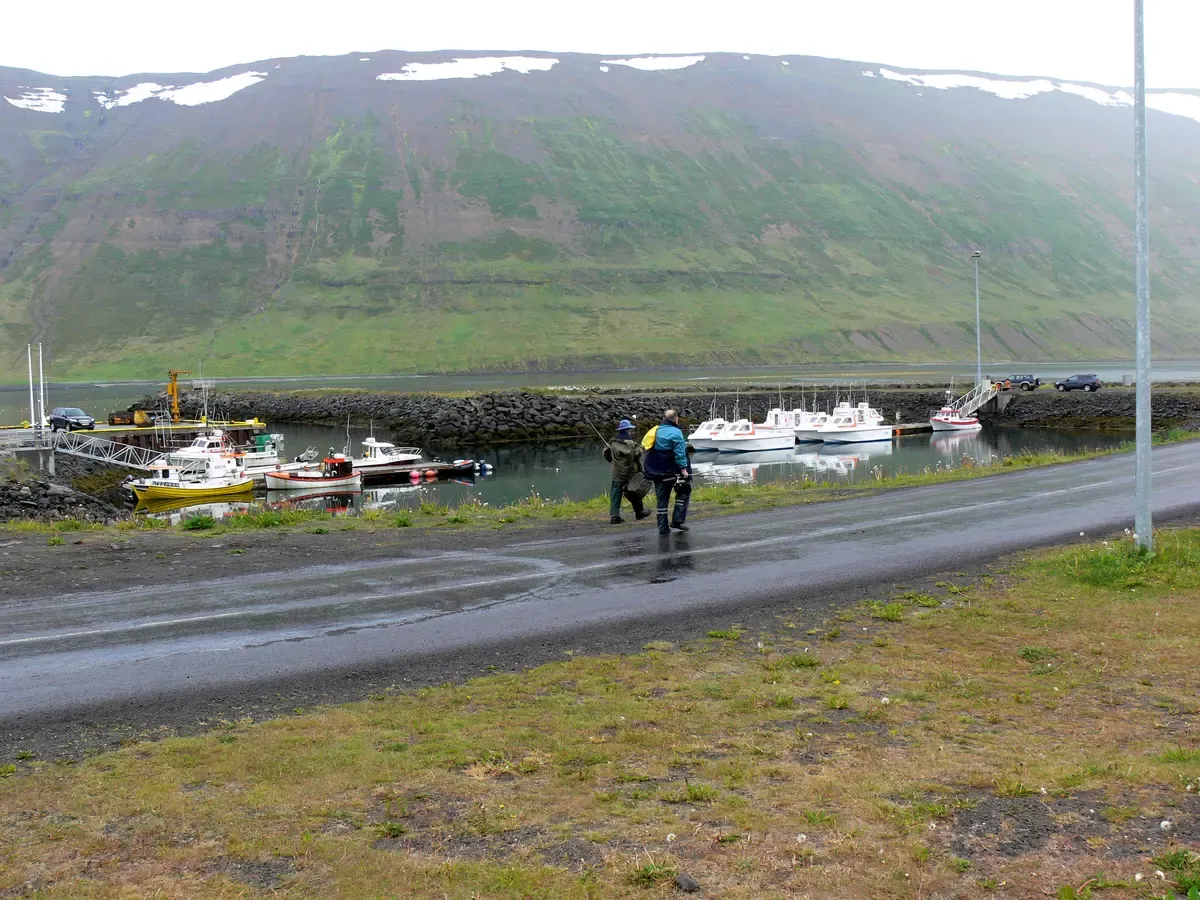
The harbour at Suðureyri, one of the Westfjords villages where self-drive sea angling boats are based. Photo: Christian Bickel fingalo, CC BY-SA 2.0 de, via Wikimedia Commons
Reykjavik Sea Angling Trips Compared
Bookable boat trips leave Reykjavik's Old Harbour for Faxaflói Bay. They differ in boat size, pickup and how the catch is cooked.
The Reykjavik Trips
All of them are shared-boat trips of 2.5 to 3.5 hours with rods, tackle and waterproof clothing supplied, and every one cooks your catch on board or back at the harbour. Prices below are the lowest listed rates on the booking platforms. Pickup is only included on one trip, so check the meeting point before you book.
Every tour can be moved or cancelled for wind and swell.
| Trip | Time on water | Group | Pickup | From |
|---|---|---|---|---|
| Sea Fishing Boat Tour & BBQ | 2.5-3 hours | shared boat | paid option, 60 min before | $162 |
| Traditional Sea Fishing with BBQ Feast | about 3 hours | up to 12 passengers | hotel pickup included | $168 |
| Sea Angling Gourmet | 3-3.5 hours | shared boat | no, meet at the pier | $188 |
| Guided Sea Angling Tour | about 3 hours | shared boat | no, meet at the harbour | $179 |
How to Choose
Want the cheapest and simplest, take the Special Tours boat at $162, the most-reviewed listing here, with the catch grilled on deck. Want a small group and a ride from your hotel, the 12-passenger Traditional Sea Fishing trip at $168 is the only one with pickup included. Want the longest session, the Sea Angling Gourmet runs 3 to 3.5 hours and barbecues the catch with homemade sauce.
The Guided Sea Angling Tour at $179 runs on the Jóhanna, a traditional Icelandic boat with an indoor cabin and a restroom, a real plus in cold weather, and it teaches the basics on board with blankets and coffee thrown in. The Special Tours 17:00 sailing needs at least two bookings to sail. Source: Special Tours, Elding, Guide to Iceland.
Fishing or Whale Watching: Which to Book
Many visitors to Reykjavik price up both boat trips and pick one. They are different days on the water, so the choice comes down to what you want to do with your hands.
Hands-On or Hands-Free
A sea angling trip is active. You hold a rod, work the line, handle the fish and, on most boats, eat what you catch. It suits anglers, curious beginners and anyone who wants a task to do for three hours.
Whale watching is the opposite. You sit or stand at the rail, scan for fins and let the crew do the work. It suits families with small children, guests who struggle with long concentration and non-anglers travelling with an angler.
Neither trip is a better deal in the abstract. Fishing gives you a meal and a story about your own catch, while whale watching gives you the chance of a large animal and little else to manage. If your group is split, book each half on the trip it will enjoy and meet at the harbour afterwards.
One Reykjavik portal frames the choice the same way, as hands-on fishing for anglers against low-effort wildlife viewing for families. Source: Reykjavik Deep Sea Fishing.
The Combo Option in the North
If you cannot choose, one boat does both. The whale watching and sea angling tour from Hauganes sails Eyjafjörður, about 30 km north of Akureyri, and fits angling and wildlife into one outing. Guide to Iceland describes the Hauganes version as a 2 hour trip.
The listing compared on this site runs about 3.5 hours at $100, so read the duration on the booking page before you plan the rest of the day. The combo is a poor fit for Reykjavik-only itineraries, since Hauganes is a long drive from the capital. For a Reykjavik stay, the fishing boats on this page and a separate whale trip are the practical pairing.
Remember that weather can move either sailing, so keep one spare day if your schedule allows it. Source: Guide to Iceland.
What Sea Fishing Costs
Seat prices are modest. Whole-boat charters and Westfjords holidays cost more and are rarely published openly.
Confirmed Prices
Seat prices are published on the booking listings: the bookable Reykjavik boats on this site run $162 to $188, and the Hauganes whale watching and angling combo is $100. Elding publishes no fare on its own page, so the price is read at checkout. Whole-boat charters and the Westfjords self-drive holidays are sold as packages with no price on the pages found, so you request a quote.
The table lines up the seats you can book today, from the cheapest to the longest session.
| Trip | Time on water | Adult price |
|---|---|---|
| Hauganes whales and angling | about 3.5 hours | $100 |
| Reykjavik sea fishing and BBQ | 2.5-3 hours | $162 |
| Traditional sea fishing, 12 passengers | about 3 hours | $168 |
| Guided sea angling | about 3 hours | $179 |
| Sea Angling Gourmet | 3-3.5 hours | $188 |
Unpublished and Unverified Figures
A guide site quotes full-day group charters at 85,000 to 120,000 ISK around Reykjavik, 95,000 to 140,000 ISK from the Westman Islands and 75,000 to 100,000 ISK on the north coast. No operator confirms those ranges, so treat them as ballpark only. Iceland Sea Angling runs more than 20 boats in Bolungarvík and Súðavík carrying up to 6 passengers each and publishes no price, booking goes through partners or by phone.
The same applies to the smaller Westfjords operators, Fisk Club in Suðureyri, Beffa Tours in Bíldudalur, West Tours in Ísafjörður and Westfjords Adventures in Patreksfjörður. For those, you contact the operator and ask. A Reykjavik portal claiming a 15 kg daily catch limit per angler matches no rule on the official permit page and should not be trusted.
Source: Whale Watching Hauganes, Iceland Sea Angling, Visit Westfjords.
Westfjords Self-Drive Boat Holidays
The Westfjords are where serious anglers go. You rent a boat, drive it yourself and fish fjords that hold big cod.
How the Trips Work
Self-drive Westfjords cod trips use Icelandic-built Seigla boats fitted with GPS plotter, radio and safety gear, and guided days are optional. One person per boat must hold a valid Coastal Motorboat Licence, so arrange that before you travel. The season runs April to September.
Cod are listed from April to September with the peak in April to June, at a range of 5 to 70 lb and an average around 20 lb. Spring skrei cod average 20 to 40 lb, with fish over 60 lb landed each year. Plaice, coalfish and wolffish fill out the season, with wolffish from April to July and coalfish strongest July to September.
The outfitter marketing this formats it as a week with charter flights from Reykjavik to Ísafjörður, fishing days and cabins included. Sources on exact numbers are operator pages, so confirm details when booking.
| Species | Season | Notes |
|---|---|---|
| Cod | April to September, peak April to June | 5-70 lb, average 20 lb |
| Skrei cod | spring | average 20-40 lb |
| Wolffish | April to July | |
| Coalfish | July to September | |
| Halibut | May to September | release, it is endangered |
Bases and Operators
Flateyri is one base, with halibut and cod packages sold from the village, nine self-catering cabins near the boats, and packages running from Wednesday around noon to Tuesday afternoon including the charter flight to Ísafjörður. Flateyri sits 20 minutes from Ísafjörður and Suðureyri. Iceland Sea Angling runs over 20 boats and apartments in Bolungarvík and Súðavík, with boats carrying up to 6 passengers and no price published, booking via partners or by phone.
The directory also lists Fisk Club in Suðureyri, Beffa Tours in Bíldudalur with a boat for up to 7 passengers, West Tours in Ísafjörður and Westfjords Adventures in Patreksfjörður. Sportquest, the operator behind the self-drive packages, is a foreign outfitter, so compare its quote against booking locally. Source: Sportquest Holidays, Iceland Sea Angling, Visit Westfjords.
Big Fish and Charter Tackle
Short Reykjavik trips and Westfjords boat holidays are different sports. The size of the fish and the gear in your hands change with them.
How Big the Cod Get
On a three-hour Reykjavik trip, expect a bucket of modest cod, haddock and pollock rather than a record. The big fish live farther out and farther north. One Westfjords outfitter says cod over 50 lb are landed regularly each season.
Treat that as the outfitter's own claim for its camps, not a promise for any single day. It also matches what the Westfjords section above says about spring skrei cod. A visitor on a short boat should plan for fish that fill a plate, and a visitor on a self-drive week can reasonably hope for a fish that fills a photo.
Halibut also grow very large in these waters, but the halibut rules covered earlier still apply, so a hooked halibut goes back alive. Source: Sportquest Holidays.
Gear on Private Charters
Anglers who charter a whole boat or head offshore will meet heavier tackle than the short tours use. One offshore guide lists bottom fishing with 30-50 lb rods, leads of 300-800 g and pirks of 200-500 g, and says most charters supply the gear. That guide also names ling and tusk on rocky bottoms at 150-300 m and redfish at 200-400 m, depths a short harbour trip never reaches.
Ask the skipper what is on board before you pack your own rods. Carrying tackle from abroad adds the freshwater disinfection rules covered earlier, so leaving your rods at home often saves effort. If you only want a taste of sea angling, the Reykjavik trips supply rods, tackle and waterproof clothing without any of this.
Source: Atlas Iceland.
North Iceland, Snæfellsnes and the Westman Islands
Outside the southwest and the Westfjords, sea angling runs on smaller boats and shorter schedules, often bundled with whale watching.
North Iceland
Dalvík's Arctic Sea Tours runs a sea angling trip of 1 to 6 hours with equipment, protective clothing and a grilled-fish tasting at the harbour, on request all year. Its 3-hour whale watching tour includes 15 minutes of sea angling and departs daily at 13:00 all year. Hauganes, 25 minutes from Akureyri on the west shore of Eyjafjörður, sails two oak boats on a fjord sheltered from the open North Atlantic.
Catch there is cod, haddock, pollock and wolffish, and weather cancellations earn a full refund or a new date. Húsavík's Gentle Giants, family-run since 2002, lists sea angling among its tours beside whale watching and kayaking, with no price or duration published for the angling trip. The bookable Hauganes combo is the whale watching and sea angling tour at $100.
Snæfellsnes and the Westman Islands
On Snæfellsnes, Stykkishólmur offers an angling tour with a local guide on a traditional Icelandic fishing boat in Breiðafjörður, targeting cod with a chance of halibut, wolffish, haddock and ocean perch. Ocean Adventures also runs Puffin Express and sea angling from the same harbour. Sea Angling Stapi is listed at Grundarslóð 10 in Snæfellsbær with a phone number, but operating details were not confirmed.
Regional material says sea angling has long been popular in Ólafsvík, close to good grounds. On the Westman Islands, a travel guide lists Eydís Boat Tours as offering sea angling beside its boat tours, meeting at Guesthouse Hreiðrið on Faxastígur. That listing is undated, so confirm it runs before you plan a day around it.
Source: North Iceland, The Abroad Guide, Frommer's.
Sea Fishing in Winter and Offshore
Most pages on this topic point to summer, and the Reykjavik boats do sail only from May to September. Winter sea fishing exists, but it works differently.
Is There Sea Fishing All Year
Yes, in a limited way. Guide to Iceland says sea fishing is available year-round, with summer by far the most popular time. In practice that means charters and a few small operators, not the shared Reykjavik boats that stop in September.
The earlier region table shows the clearest example, where Dalvík angles on request all year. A winter trip depends on a skipper agreeing to sail, so the day is yours only if the forecast allows it. Daylight is short, the sea is colder and the swell is usually bigger.
Book winter fishing as a private outing, ask what the boat does if the weather turns, and keep a second date free. Source: Guide to Iceland.
Offshore Cod From September
One offshore guide calls September to April the best period for offshore cod, with fish typically between 5 and 15 kg. It adds that winter fishing is possible but weather-dependent. That is a single guide's view, so treat it as a charter-only option and not a standing tour you can book from a list.
If you want cod at that size, the realistic routes are a private charter or a Westfjords outfitter, since the shared Reykjavik trips are closed by then. For a first sea trip with children or nervous passengers, the summer boats remain the sensible choice. For an angler who already knows a heavy rod, the shoulder season can be worth the extra planning.
Source: Atlas Iceland.
Seasons, Weather and Staying Well
Season windows differ by region, and every operator warns that trips depend on weather.
When to Go
Reykjavik boats sail May to September. Special Tours runs daily at 17:00 from the start of May to 15 September, and Elding lists 1 May to 20 September. The Westfjords cod season is April to September, peaking April to June, which is the best window for a big skrei or a 40 lb fish.
In the north, Dalvík angles on request all year, so a winter trip is possible if the boat sails. Coalfish peak in July, wolffish run April to July, and mackerel has no published angling season at all. One guide says May to September has the most consistent weather overall.
If your trip is about fish plus comfort rather than records, late June through August gives warmth, long evenings.
Seasickness and What to Wear
All listed trips are weather-dependent and sailings cannot be guaranteed. No operator publishes a seasickness policy, so plan ahead. Motion-sickness tablets taken 30 to 60 minutes before departure are the standard advice, and one listing warns that anyone prone to seasickness should skip the open-bay trip.
If swell worries you, book a fjord instead: Hauganes fishes sheltered Eyjafjörður and the Westfjords fjords stay calm when the open ocean is rough. Dress in layers with a waterproof shell and non-slip footwear. Operators supply protective clothing or rain jackets, and one Reykjavik operator advises warm clothes and sunscreen in summer because the sun reflects off the water.
The evening trips get cold even in July, and Viggson Sailing hands out blankets for a reason. Source: Special Tours, North Iceland, Atlas Iceland.
Meeting Point, Check-In and Cancellations
The practical details decide whether the afternoon goes smoothly. Here is what the Reykjavik operators publish about where to be, what is included and when a trip does not sail.
Finding the Boat
Most Reykjavik trips leave from the Old Harbour area, and the exact spot differs by operator. Special Tours meets guests at its ticket office at Geirsgata 11. Elding boats leave from Ægisgarður 5c, 101 Reykjavik, and Elding asks guests to arrive 15 to 30 minutes before departure.
There is no parking at the harbour itself. Pay-to-park spaces and a garage sit nearby, so allow time to find a space if you drive. Where a paid pickup is offered, it starts 60 minutes before the trip.
Check the meeting point on your voucher, because the two addresses above are not interchangeable. Bring valid ID, which Special Tours asks for at check-in. Source: Special Tours, Elding, Elding FAQ.
What Is Usually Included
The shared boats follow a common pattern. The Special Tours trip lists the guide crew, rods and equipment, protective clothing, a barbecue on board and a toilet on board, with guiding in English. That matches the supplied rods and waterproof clothing noted for the other boats in the table above.
If a toilet matters to you, check the listing before booking, since smaller traditional boats vary. Children are covered by safety gear too. Elding's general boat tour rules require guests under 13 to wear life vests, though that is a company-wide policy and not an angling-specific rule.
Source: Special Tours, Elding FAQ.
Weather, Minimum Passengers and Refunds
Two things can stop a sailing. The first is weather. On Elding boat tours, weather cancellations can be made up to 2 hours before departure, with a reschedule or a full refund, and booking is free to cancel until 24 hours before.
The second is low numbers. Special Tours needs at least 2 passengers per departure, and if that is not reached the trip is rescheduled or refunded in full. Always read the policy on the listing you book, because these are two operators' rules and not one standard.
For seasickness, Elding suggests sitting toward the back, facing the waves, keeping your eye on the horizon and eating a light meal. It supplies free antiemetics and ginger tablets on its boat tours. Source: Elding FAQ, Special Tours.
Shore Fishing, Keeping Your Catch and Taking It Home
You can fish from the rocks for free, and most boat tours let you keep what you catch. The rules on export are less clear.
Shore Fishing Without a Boat
Shore angling at sea with rod and hand line needs no permit, the same as boat fishing. Landowners' rights apply, so respect fenced ground and private property along the coast, and the catch cannot be sold. One guide quotes a rod-hire pier option at Reykjavik's Old Harbour at about 30 USD an hour, though no operator confirms that figure, so ask at the harbour when you arrive.
Bring weight-appropriate gear for casting into swell and watch the surf line. Shore fishing pairs well with a car trip around the Snæfellsnes peninsula or the Westfjords, where fishing villages sit minutes apart.
Keeping the Catch
Most fishing tours let you keep the fish, filleted aboard. Some grill it on board with potatoes and sauce, others pan-fry it back at the harbour or have a restaurant cook it. Tours holding a quota permit may sell fish, no-quota tours cannot, which means your fish is yours.
On the daily cap, a no-quota boat is limited to 49, 60 or 75 fish per vessel per day depending on its size, a fleet limit rather than a personal one. Taking fish home is murkier. No Icelandic rule on exporting a recreational sea catch was found.
Customs allows travellers to import up to 10 kg of food duty-free, but that covers goods coming into Iceland, not leaving it. Anglers' forum posts report flying home with frozen fillets in insulated boxes, and one Westfjords outfitter quotes up to 20 kg of filleted fish for its camps. Ask your operator what it packs before you fly.
Source: island.is, Guide to Iceland, Skatturinn.
Sea Fishing in Iceland Questions
Can foreigners fish in Iceland?
Yes. Sea fishing with rod and hand line for your own consumption needs no permit and no fee, and the same applies to visitors. The catch may not be sold. Rivers and lakes are different, since they need a permit from the rights holder, or a Fishing Card that covers lakes. Freshwater anglers bringing used tackle must also carry a disinfection certificate.
What month is best for deep sea fishing?
May to September is the main window, which is when the Reykjavik boats sail and Westfjords cod peaks April to June. If you want the biggest spring cod, aim for April to June in the Westfjords. In North Iceland, Dalvík runs sea angling on request all year, so winter trips are possible. Weather cancels trips in every month.
How much does it cost to fish in Iceland?
On the trips compared here, a seat costs $100 for the Hauganes whale watching and angling combo and $162 to $188 on the Reykjavik boats, for 2.5 to 3.5 hours with gear included and the catch cooked on board. Shore fishing is free. Westfjords self-drive holidays are quoted on request, with no published price.
Is there fishing for tourists in Iceland?
Yes. Sea angling boats sail from Reykjavik, Dalvík, Hauganes, Húsavík, Stykkishólmur, the Westman Islands and several Westfjords villages. Guided freshwater days cover rivers and lakes, and an ice fishing tour runs from Akureyri in winter. Permits are included on guided freshwater trips, and sea fishing needs no permit at all.
Do you need a licence for sea fishing in Iceland?
No. Anyone may fish at sea with rods and hand reel line, without an automatic jigger, for their own consumption. The catch cannot be sold and landowners' rights apply when fishing from shore. Licences are only needed for freshwater, where every river system has its own rules and permits, and gear must be disinfected before use.
Can you take the fish you catch home?
Usually yes. Most tours let you keep your fish, filleted on board, and many cook part of it for you. No Icelandic rule on exporting a recreational sea catch was found, so there is no confirmed official cap on taking fillets out of the country. Travellers report flying home with frozen fillets in insulated boxes. Ask your operator what it packs and check your airline.
What happens if the weather is bad?
Trips are weather-dependent and operators state that sailings cannot be guaranteed. Cancellations are moved to another date or refunded, and the Hauganes operator states that weather cancellations earn a full refund or a new date. Book with free cancellation where you can, keep a spare day in your plan and pick a sheltered fjord trip if the forecast looks rough.
Is sea fishing in Iceland good for children?
Yes, with checks on age rules. The Reykjavik listings vary: one operator lists no minimum age, another does not recommend its trip under 4, and a third is not suitable under 2. Lifejackets are supplied for children on the small-boat trip. Short 2.5 to 3 hour trips with the catch cooked on board hold children's attention, and the Hauganes fjord trip suits families who worry about swell.
Should I book sea fishing or whale watching in Reykjavik?
Book fishing if you want to hold a rod and eat your own catch. Book whale watching if you want a low-effort wildlife trip, which suits young children and non-anglers. They are different outings, so many visitors do both on separate days. If you want one boat for both, the Hauganes combo in North Iceland covers whales and angling together.
How many passengers are needed for a sea angling trip to sail?
It depends on the operator. Special Tours needs at least 2 passengers per departure, and if the minimum is not met it reschedules the trip or refunds in full. Check the minimum on your listing before you book.
Where do I meet for a sea angling trip in Reykjavik?
At the Old Harbour, but the exact address depends on the operator. Special Tours uses its ticket office at Geirsgata 11, and Elding boats leave from Ægisgarður 5c. There is no parking at the harbour itself, only pay-to-park spaces and a nearby garage. Arrive 15 to 30 minutes early and bring valid ID.
Can you go sea fishing in Iceland in winter?
Yes, but not on the shared Reykjavik boats, which sail from May to September. Guide to Iceland says sea fishing is available year-round, and one offshore guide rates September to April as the best time for offshore cod. Winter trips are usually private charters or on-request outings, and they depend on the weather.