 Iceland Fishing Tours
Salmon Fishing in Iceland: Rivers, Seasons and What a Rod Costs
Anglers rod-caught 34,186 Atlantic salmon in Iceland in 2025 and released 65.8 percent of them. Salmon fishing in Iceland happens on private beats sold by the rod, mostly from late June to late September, with the Rangá rivers fishing into October. This guide sets out the top rivers by catch, the rules on flies and release, and what a rod-day or lodge week actually costs.
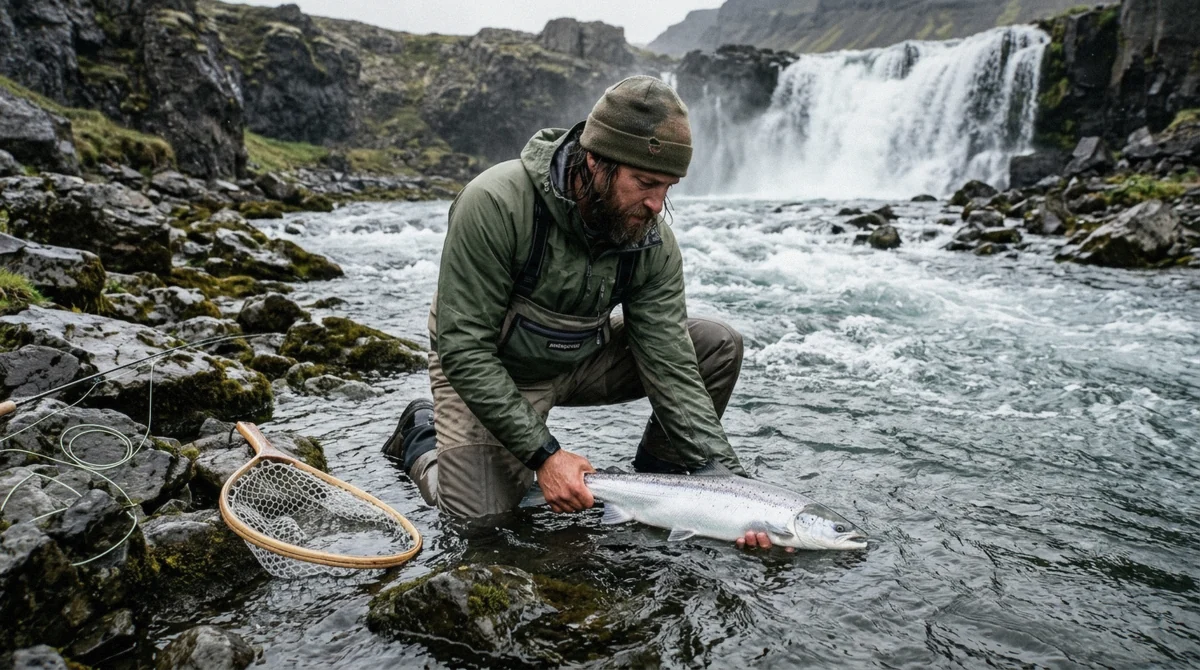
Quick answer Top rivers, rod prices and the season in three sentences
The best rivers by 2025 catch were Ytri-Rangá with 5,707 salmon, Eystri-Rangá with 2,870 and Þverá-Kjarrá with 1,871. A salmon rod costs from 33,100 ISK for a half day on Leirvogsá up to 230,000 ISK a day on Eystri-Rangá in peak weeks, and lodge weeks run roughly £1,800 to £12,870 per rod. The season is about 90 days, mostly late June to late September, with two fishing sessions a day and a rest period in between.
Key takeaways
- Rivers are 100 percent private, so you book a beat and rod, not a licence alone.
- Two thirds of salmon now go back, and many rivers are fly only.
- The Elliðaár in Reykjavik sells half-day catch-and-release rods from 20,500 ISK.
- None of the bookable day tours on this site targets salmon, but guided trout and char days and sea angling tours do run.
- For licence basics and gear disinfection see the Iceland fishing licence guide.
The 2025 Catch in Numbers
Iceland publishes full river-by-river rod catch statistics every year through its marine research institute.
National Rod Catch and Release Rates
The 2025 rod catch was 34,186 Atlantic salmon, of which 11,680 were landed and 65.8 percent released. That is 17.5 percent below the 1974 to 2024 average. Grilse, salmon that spent one winter at sea, dominated the run: 25,423 small salmon against 8,763 large multi-sea-winter fish. The commercial net catch was small by comparison at 2,294 fish.
The trend matters for planning. The 2024 rod catch was 43,517 salmon with 29,370 released, so 2025 came in about 9,000 fish lower. The 2023 preliminary figure was about 32,300, roughly 22 percent below the long-term average and the second worst year in half a century. Fresh figures arrive every Thursday through summer on the river owners' federation site, with last season's final numbers beside each river, so you can watch a season build before you book a late-week rod.
Source: Hafrannsóknastofnun, Lax- og silungsveiði 2025, angling.is.
Top Rivers by 2025 Rod Catch
The table below ranks the ten best rivers by total salmon rod-caught in 2025, using the official statistics. The landed column shows fish killed, which tells you how strictly a river enforces release. Wild rivers such as Norðurá landed just 221 of their 1,150 fish, while the ranched Rangá rivers account for most of the kill. Veiðiheimar's own table lists 6 rods and 724 fish for Elliðaár against the research institute's 725, a one-fish difference between sources that changes nothing for a visiting angler.
Compare rivers on total catch, the share released and how many rods share the water before you look at price, because a river with 6 rods fishes very differently from one with 22.
| River | 2025 rod catch | Landed (kept) | Rods (typical) | Character |
|---|---|---|---|---|
| Ytri-Rangá (with Hólsá west bank) | 5,707 | 4,062 | 22 | Ranched, big numbers, lodge included mid summer |
| Eystri-Rangá | 2,870 | 1,520 | 16-18 | Ranched, grilse river, evening surface sport |
| Þverá-Kjarrá-Litla Þverá | 1,871 | 354 (Þverá-Kjarrá) | not stated | West, fly water |
| Miðfjarðará | 1,266 | not stated | 6-10 | Catch and release, 200+ named pools |
| Norðurá | 1,150 | 221 | 12-15 | Wild, averages 2,500 a season over more years |
| Selá í Vopnafirði | 1,124 | not stated | not stated | Top river of the east |
| Jökulsá á Dal | 933 | not stated | 12 (Jökla) | North-east |
| Hofsá | 876 | not stated | not stated | North-east, double-handed water |
| Haffjarðará | 823 | not stated | 6 | Small-rod west river |
| Laxá í Dölum | 785 | not stated | 6 | West, six-rod river |
Catch by Region
Region totals show where the fish actually were in 2025. The south led with 12,050 salmon, almost all of them from the Rangá system. The west followed with 9,573, thanks to Miðfjarðará, Norðurá, Langá and their neighbours. Then it drops away: the north-west produced 3,382, the east 3,303 and the north-east 3,072. The Reykjanes area around Reykjavik, the easiest water to reach from the capital, gave 2,210, and the Westfjords just 596.
Within the regions, Laxá in Aðaldal led the north-east with 628 salmon and Selá led the east with 1,124. If you want the biggest numbers you go south to the Rangá rivers. If you want fewer rods, wilder country and a longer drive, you go north or east. Both approaches are legitimate, and the choice is mostly about budget and how much driving you want. Rod counts are published per river, though operator pages and the national table disagree for some rivers, so confirm with the booking office.
Six Rivers Compared
The catch table says how many fish a river gave. This table says what fishing it is like, which matters more when you pick one.
What Each River Is Like to Fish
The six rivers below cover the main types of Icelandic salmon water, from a gin-clear pool river to a glacial one to black volcanic sand. Rod numbers and fish sizes come from outfitter and agent pages, so treat them as typical and confirm for your dates.
The pattern is simple. Small, clear rivers reward careful single-hand work and hitched tubes. Big, coloured or sandy rivers suit double-handers, larger flies and sinking lines. Pick the river whose water matches the tackle you are happy to fish.
| River | Coast | Rods | Water | Fish |
|---|---|---|---|---|
| Miðfjarðará | West | 6-10 over five beats | Four-river system, 220+ named pools, single or small double-hand rods and hitch tubes | Early fish 10-18 lb, main run grilse |
| Norðurá | West | 12 | 100+ pools over 65 km, canyon on the lower river, wide gravel bends in the middle | About 2,500 salmon a season |
| Blanda | North | 8 on beats 1-2 | Glacial, 125 km long, opens in early June | High share of multi-winter salmon |
| West Rangá | South | 16 | About 50 m wide, black sand makes wading easy, double-handers and sinking lines | Grilse 5-7 lb, multi-winter 9-16 lb |
| Laxá í Kjós | Near Reykjavik | 8 | Small rock pockets and canyons, hitch and sight fishing | Sea trout run through August |
| Fossá and Sog | South | not stated | Fossá is fly only and release only below Hjálparfoss. Sog is spring-fed and about 12 km of it is passable to salmon | not stated |
Why the Differences Matter
West Rangá is stocked, and its smolt programme has run since 1989. That is why the numbers are big and the wading is easy. Blanda is the opposite. A glacial river with a high share of multi-winter fish suits an angler after size rather than numbers, and it opens in early June, well before most of the others.
Laxá í Kjós and the Sog are the practical picks for anyone short on time. The Sog is about one hour east of Reykjavik. Laxá í Kjós fishes small pockets where you can see the fish, so it rewards the sight-fishing approach covered in the flies and methods section below.
Source: Fishing Iceland, Aardvark McLeod.
Ranched Rivers and Wild Rivers
Iceland's salmon fishing splits into two systems, and the difference shapes everything from catch numbers to how many fish you may keep.
What Sea Ranching Means
Ranched rivers rely on smolt release rather than natural spawning alone. In 2025 they produced 9,261 salmon, about 27 percent of the national rod catch. The ranched group is small and fixed: Ytri-Rangá, Eystri-Rangá, Hólsá on both banks, Affall and Þverá in Fljótshlíð. Together they gave 6,141 landed and 3,120 released.
The practical upshot is simple. Ranched rivers are where the big catch numbers live, they fish later in the year and they allow more fish to be kept. Ytri-Rangá and Eystri-Rangá together topped 8,500 rod-caught salmon in 2025, more than most wild rivers see in several seasons. They also run the longest season, still fishing into October after the wild rivers have closed. If you want the highest chance of fish per rod-day and you are happy that many of those fish began life in a hatchery, the Rangá system is the obvious pick.
Wild Rivers and Strict Release
Wild rivers run on natural stocks and mostly enforce catch and release or tight bag limits. Norðurá landed 221 of its 1,150 salmon in 2025, under a fifth of the catch. Miðfjarðará is described as strict catch and release, and Fossá is fly only and release only. On Eystri-Rangá, which is ranched, any salmon over 70 cm must go back without exception and a rod may keep only three small grilse per shift. Ytri-Rangá releases every female of 68 cm or more.
For a visiting angler the distinction matters less than it might seem. Whatever river you choose, expect to release most of what you hook, including every big fish on the Rangá rivers. On Hvítá-Iða the bag is a single salmon under 70 cm per rod per day. The fishery's culture has moved firmly toward catch and release nationally, with nearly two thirds of the 2025 catch returned alive.
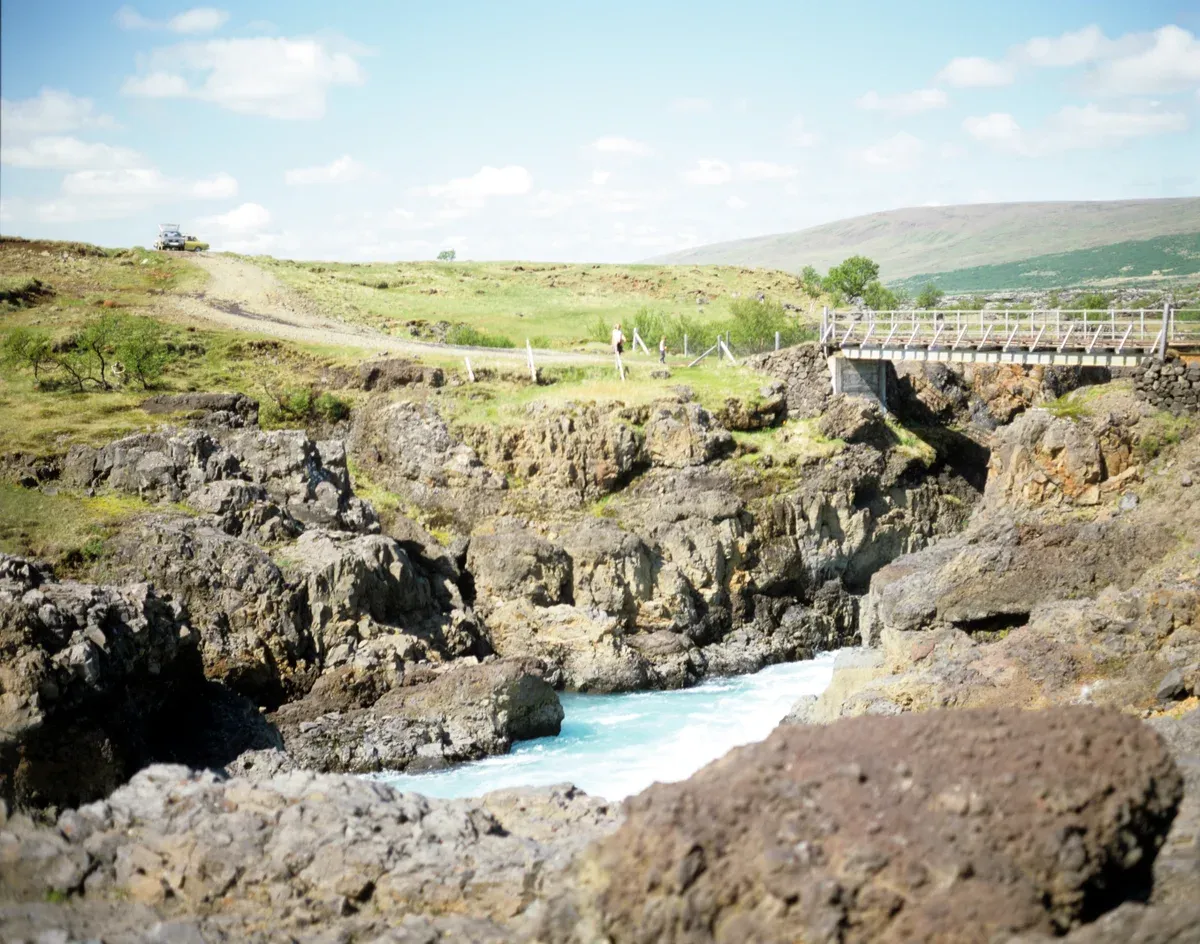
Ytri-Rangá, the ranched river that topped the 2025 salmon rod catch. Photo: Christian Bickel fingalo, CC BY-SA 2.0 de, via Wikimedia Commons
Season Dates and Run Timing
The Icelandic salmon season is short and regulated, with open dates and daily fishing hours set river by river within national limits.
When the Rivers Open and Close
A summary of national rules caps the rod season at 105 days within 20 May to 30 September. In practice most salmon rivers open in late June and run about 90 days to late September. The Rangá rivers stretch that window: Ytri-Rangá fishes 20 June to 20 October and Eystri-Rangá 1 July to 20 October, since ranched rivers keep fishing after the wild rivers close. One source gives an alternative national window of 5 June to the end of September, so treat the extremes as river-specific and check your river's own dates.
Run timing follows the coast. West-coast rivers peak early to mid July. East and north-east rivers build from mid July. The Rangá rivers peak from mid July through early August, with fresh multi-winter fish early and a push of grilse later in the summer. If your dates are fixed to a specific fortnight, pick the coast that matches rather than chasing the headline river of the moment.
Daily Fishing Hours and the Rhythm of a Rod-Day
Fishing hours are regulated, not open-ended. Two sessions a day are the rule, with a mandatory rest period between them and no night fishing despite the summer daylight. The published times differ between sources: 07:00-13:00 and 16:00-22:00 on one description, 08:00-13:00 and 16:00-21:00 on another, and 7am-1pm and 3pm-10pm on a third. Veiðiheimar lists the Elliðaár at 07:00-13:00 and 15:00-21:00. Each river sets its own hours, always 12 hours a day or less, so confirm the exact sessions when you book.
On a Rangá lodge week the rhythm is fixed and social. Two anglers and one guide share a beat, with guide trucks and a lodge never more than 20 minutes from the water. A typical day starts with a 6:45 departure, fishing at 7:00, then back to the lodge for a hot lunch and a siesta before the evening session. It is a full day, and the two-hour rest is enforced rather than optional.
Peak Weeks by Coast and a Lodge Day
Season dates tell you when a river is open. Peak weeks tell you when the fish are in, and the lodge timetable tells you how long the day really is.
When Each Coast Peaks
Fishing Iceland puts the prime window at 15 July to 15 August. Inside that window the coasts peak at different times, so a fixed fortnight points you to one coast. Where Wise Men Fish gives the split below. The north is the one most trip plans miss, because it peaks after the west has already faded.
If your dates fall in early August, go north. If they fall in early July, stay west. Mid to late July is the east.
| Coast | Peak weeks | Best fit |
|---|---|---|
| West | Early to mid July | Trips in the first half of July |
| East | Mid to late July | Trips in the second half of July |
| North | Early to mid August | Trips in the first half of August |
A Lodge Day, Hour by Hour
A lodge day is long and tightly timed. The Fly Shop describes the rhythm on the Rangá rivers.
- 06:00 breakfast - 06:30 collect gear - 06:45 leave with the guide - 07:00 start fishing - 13:00 lunch at the lodge - 15:00 back on the water, usually on a second beat - 22:00 fishing ends and you drive back
The two-hour rest in the middle is mandatory on all rivers, and the lodge is never more than 20 minutes from the beats. Guide trucks do the driving. Beats change at midday, so you fish two different stretches in one day. That is why lodges serve three meals a day on site.
Source: Where Wise Men Fish, Fishing Iceland, The Fly Shop.
Rods, Beats and Rotation
Every river carries a fixed rod count and rotates anglers through its pools, which is what keeps pressure low on small Icelandic water.
How Many Rods Share Each River
Rod numbers are the quiet reason Icelandic salmon fishing stays productive. Big rivers cap at well under two dozen anglers and small rivers run to a handful. Published counts differ between the national table and operator pages for some rivers, so treat these as typical rather than exact and confirm with the booking office for your week.
The counts shape the experience as much as the catch does. A six-rod river such as Elliðaár, Haffjarðará or Laxá í Dölum means six anglers rotating through the whole system. A 22-rod Ytri-Rangá means beats and a strict rota across far more water. Rivers with double-handed rod water such as Hofsá and Big Laxá are fished differently from small grilse streams, and the tackle list below follows from that.
| River | Rods (Veiðiheimar table) |
|---|---|
| Ytri-Rangá | 22 (operator pages say up to 18) |
| Eystri-Rangá | 16 (operator pages say up to 18) |
| Norðurá | 15 (operator pages say 12) |
| Langá á Mýrum | 12 |
| Laxá í Aðaldal | 12 |
| Jökla | 12 |
| Miðfjarðará | 10 |
| Stóra Laxá | 10 |
| Grímsá | 8 |
| Laxá í Kjós | 8 |
| Leirá | 7 |
| Elliðaár | 6 (4 in June and from mid August) |
| Haffjarðará | 6 |
| Laxá í Dölum | 6 |
Small-Rod Trophy Rivers
At the exclusive end, a few rivers sell whole-rod or whole-lodge access on tiny rod counts. Haukadalsá has 5 rods and sits less than two hours from Reykjavik. Hítará runs 6 rods over 29 km. Straumfjarðará is 4 rods on 27 pools with a 10-person lodge. Hrútafjarðará takes just 3 rods and averages 400 to 600 salmon a season, and Deildará is also a 3-rod river. West Rangá, for comparison, fishes 12 to 20 rods across 6 to 10 beats on about 28 km of double-bank water with a 22-bedroom lodge, and averages about 6,000 salmon a season with fish around 12 lb on average and one in twenty over 20 lb.
Scarcity is priced in. Straumfjarðará was listed at £8,220 per rod for 4 days, or £30,820 to take the whole lodge. On the other end of the scale Stóra Laxá landed 821 salmon in 2024 including 50 fish over 90 cm, and Norðurá averages 2,500 a season over 12 rods and more than 100 pools along 65 km. Match the river to the number of anglers in your party, since a 3 or 4-rod river may effectively be a private booking.
Fly Rules, Release Rules and Tackle
Icelandic salmon rivers are lightly fished but tightly ruled, so know the fly, bait and release conditions before you travel.
Fly Only and Bait Windows
Many Icelandic salmon rivers are fly only, at least for part of the season. Ytri-Rangá is fly only for most of the season with worms and spinners allowed only from 10 September to 6 October. Eystri-Rangá is fly only until noon on 1 September, then allows mixed baits. Fossá is fly only and catch and release all season.
Release rules ride on top of the fly rules. Eystri-Rangá releases every salmon over 70 cm and allows a maximum of three small grilse kept per rod per shift, with brown trout and char going back. Ytri-Rangá releases all females of 68 cm or more. Hvítá-Iða allows one salmon under 70 cm per rod per day. Nationally 65.8 percent of the 2025 rod catch was released. Book a bait-fishing week only if you know the window is open, because arriving for spin fishing a week early means a week of casting flies.
What to Bring
A single-hand rod in the 7 to 8 weight range covers most Icelandic rivers. Flies run small, size 14 and below, with riffle hitch and Sunray Shadow patterns the recognised patterns, and treble hooks standard on most beats. Bring a double-handed rod only for the big channels: Big Laxá, Hofsá and Breiðdalsá are the classic spey waters.
One legal step catches travellers out. Used fishing equipment must be disinfected before use in Icelandic rivers and lakes, and you must present a certificate of disinfection. You can have this done by a vet in your home country, at the disinfection service at Keflavik Airport, or in Iceland by vets and recognised bodies such as angling associations. The rule covers rods, reels, hooks, lures and waders, while new unused gear is exempt. A separate rod licence is not bought on its own for salmon, because the permit comes with your beat booking. Our fishing licence guide covers the full process.
Flies, Lines and Methods for Clear Water
Icelandic rivers are often small and very clear, so how you fish matters as much as what you carry.
Spot the Fish, Then Cast
In clear water you can often see salmon in their lies from a high bank. Spot first, then approach. Keep off the skyline, because a silhouette on the crest of the bank will spook fish. Your guide will usually call the cast and tell you where the fish is holding.
Lines are simpler than the fly boxes suggest. Floating lines are used almost exclusively, and rods stay under 13 ft. The exception is the Rangá, where a sinking-line option is worth packing for the deeper, sandier runs.
Flies and the Riffle Hitch
Flies run small. In low water, size 14 doubles drop to size 18 micro trebles. Trebles stay standard because the flies are so small. Hitched Sunray and Collie Dog tubes with a half-inch tube are normal, and bodies from three quarters of an inch to an inch and a quarter are usable. Snaeldas and coneheads are for deep pots.
The riffle hitch is the method to learn. A half-hitch on the tube or fly makes it skate and leave a V wake on the surface. Strip fast on rough water. Every take is visible, which is half the appeal.
When the river runs high, small flies fail. One angler fishing the Fljota in late July in unusually high water got nothing on micro flies until he switched to a sinking line and large Snaeldas. The lesson he drew was to hire a local guide, even for one day, and ask what the river wants.
Weather on the River
July and August can turn hot very quickly. Snow or sleet is still possible, and the weather is highly localised. Reykjavik tells you nothing about the river, which may be a few hours away in another valley. Pack for both warm sun and sleet, and carry waterproofs in the bag even when the capital looks fine.
Source: Where Wise Men Fish, Fishing Iceland.
What a Salmon Rod Costs
There is no national permit for salmon. You buy a rod on a named river, by the half day, the day or the multi-day lodge slot, and prices range from city-river half days to five-figure lodge weeks.
Day Rods and Half-Day Rods
Day-rod prices split sharply between the big rivers and the smaller ones. The Rangá rivers top the list: Ytri-Rangá charges 40,000 to 220,000 ISK per rod per full day depending on the week, with lodge accommodation included from 6 July to 22 September, and Eystri-Rangá runs 47,000 to 230,000 ISK a full day. Smaller rivers sell half days and short days at a fraction of that, though with far fewer fish expected.
The cheapest genuine salmon option in the country is the Elliðaár in Reykjavik, where a half-day rod costs 20,500 to 37,400 ISK. An earlier published range read 17,800 to 32,500, so confirm the current figure with the seller. Leirvogsá, also on the Reykjanes peninsula, sells 2 rods per half day at 33,100 to 85,900 ISK with a bag of 4 fish per rod per day.
| River | Price | Duration | Notes |
|---|---|---|---|
| Elliðaár, Reykjavik | 20,500-37,400 ISK per half-day rod | Half day | Flies only, catch and release, 6 rods |
| Leirvogsá | 33,100-85,900 ISK | Half day | 2 rods, 4 fish per rod per day |
| Leirá | 55,800-79,800 ISK | not stated | 7 rods |
| Laxá í Leirársveit | 65,000-210,000 ISK | Full day | not stated |
| Ytri-Rangá | 40,000-220,000 ISK per rod | Full day | Lodge included 6 July-22 September |
| Eystri-Rangá | 47,000-230,000 ISK per rod | Full day | 3 grilse under 70 cm may be kept |
Lodge Packages and What They Include
Multi-day lodge packages are priced per rod and quoted in pounds by the UK agents who hold the slots. The 2025 list showed open rods from £1,800 for three self-catered days on the small Grjóta river up to £12,870 for 4 days on Víðidalsá, with prime 3-day rods on Norðurá, Miðfjarðará and Langá clustered between £5,490 and £8,030, the top of that range converting to $10,734. West Rangá was listed at €5,975 to €8,760. Last-minute 2026 slots on Stóra Laxá opened at £4,650 per rod in mid August, which is $6,216.
Inclusions are fairly standard. A package covers full-board lodging, a shared guide, daily transfers to the beat and transfers from Reykjavik. Flights, the airport-to-Reykjavik transfer, alcohol and gratuities are not included, and a single room or a private guide costs extra. Prices are per rod sharing a beat with a partner. Fishermen travel light on other fronts because the lodge week is a hosted format: you fish, eat and sleep with the same party all week.
| River / package | Price per rod | Length | Format |
|---|---|---|---|
| Grjóta | £1,800 | 3 days | Self-catered |
| Stóra Laxá | £2,870, up to £6,420 | 2 days | Full board, guide |
| Nordurá | £5,490-£8,030 | 3 days | Full board, guide |
| Miðfjarðará | £6,550-£7,420 | 3 days | Full board, guide |
| Langá | £7,100-£7,850 | 3 days | Full board, guide |
| Víðidalsá | up to £12,870 | 4 days | Full board, guide |
| West Rangá | €5,975-€8,760 | not stated | Full board, lodge |
Cheaper Ways Onto the Water
If those numbers are out of reach, three routes cost less. First, the Elliðaár half-day rods in Reykjavik are the cheapest salmon permits in the country, though demand for the summer season ran at about double the supply, with over 1,500 members of the angling club applying before the deadline. The river is sold by SVFR and its form states the Elliðaár cannot be rebooked, so treat it as a lottery-style booking you plan well ahead. The City of Reykjavík also allocates some permits.
Second, watch the last-minute market. Lodge weeks sell out early and the country is heavily booked, mainly by repeat anglers, but cancelled rods appear in the weeks before the season, and agents publish them openly. Third, accept that none of the bookable day tours on this site targets salmon at all, because salmon beats are sold privately. If you simply want a guided freshwater day, the private lake and river fishing tour from Reykjavik fishes for brown trout and Arctic char with permits included, and sea angling in Faxaflói runs daily all summer from a fraction of a salmon rod-day.
The Elliðaár: Salmon in the Capital
Reykjavik has its own salmon river running through the city, and it is the most accessible and most contested salmon water in Iceland.
Season, Rods and Rules
The Elliðaár fished 21 June to 15 September with flies only and full catch and release. It runs 6 rods, reduced to 4 in June and from 16 August, in two sessions, mornings 07:00-13:00 and evenings 15:00-21:00. A half-day rod costs 20,500 to 37,400 ISK. Two local restrictions matter: no fishing within 50 m of the fish ladder at the Elliðavatn dam, and the western branch is closed.
The river also produces. It took 725 salmon in 2025, the top river on the Reykjanes peninsula, ahead of Laxá í Kjós og Bugða on 686 and Leirvogsá on 584. Catching a wild Atlantic salmon twenty minutes from a hotel room is the reason demand is so fierce, and the release-only rule means those fish are returned to run again.
How Permits Are Sold
Demand for Elliðaár permits for the summer ran at about double the supply, with over 1,500 members of the selling club applying before the deadline. SVFR, the angling association that sells the river, operates from Suðurlandsbraut 54 in Reykjavik on +354 568 6050 and [email protected], open Monday to Thursday 8:00-16:00, closing 12:00-13:00 on Tuesdays and Thursdays, and Friday 12:00-16:00. Its website is Icelandic only, and its booking form states the Elliðaár cannot be rebooked. The City of Reykjavík also allocates some permits.
SVFR also sells other salmon water, including Flekkudalsá, Haukadalsá, Langá, Laxá í Mývatnssveit and parts of Laxá í Aðaldal, so the same office can quote alternatives if the Elliðaár draw fails. Apply by the published deadline rather than hoping for a spare rod, and have a second river in mind before you call.
Booking, Guides and Gear Formalities
Salmon beats sell through river booking offices and specialist agents, and a first-time visitor needs to plan the guide, the disinfection certificate and the lead time together.
Lead Times and Finding a Rod
Lodge weeks sell out early, and agents report the country heavily booked mainly by repeat anglers. Prime July space was described as scarce two months before the season on one river system, and lodges are often booked years in advance by returning parties. The practical rule is to book July a year ahead and to watch for cancelled rods in the weeks before your dates if you travel light.
For real-time numbers, the river owners' federation publishes weekly catch figures from the major rivers every Thursday through summer, with last season's finals beside each river, so you can see which system is running hot before committing to a late-week rod. Guides are strongly advised even for a single day on an unfamiliar river, and one source states that almost all river fishing must be booked with a guide. Rod-sharing with a partner keeps the per-angler cost down because packages are priced per rod sharing a beat.
Licences, Disinfection and What to Expect
Every Icelandic river is privately held, so access comes through the beat booking rather than a standalone licence, and the permit includes your rod, beat rotation and fishing hours. The gear rule is separate and enforced: used equipment must be disinfected with a certificate before use in freshwater, available from your home vet, at Keflavik Airport or through Icelandic vets and angling associations. The fisheries authority expects permit prices to rise in line with inflation, and anglers reported escaped farmed salmon and increasingly common humpback salmon in rivers in autumn 2023, both of which the booking offices track.
If a full salmon package is not your trip this time, there are still bookable days on the water. The private lake and river day from Reykjavik targets brown trout and Arctic char with permits, rods and transport included, ice fishing near Akureyri runs in winter while the ice holds, and the Reykjavik sea angling boats sail daily through summer. For broader seasonal planning see the Iceland fishing tours and the fishing calendar.
Getting to the River and What a Package Covers
A salmon trip starts the day before the fishing. Plan the flight, the first night and the exclusions together.
From Keflavik to the Lodge
Keflavik is the only international airport, about 45 minutes from Reykjavik. The usual pattern is to land, overnight in Reykjavik, and be collected early the next morning. You reach the lodge by midday and fish the afternoon session. Do not book a lodge week that starts with a morning session on the day you land.
Some water is closer. The Sog is about one hour east of Reykjavik, and Haukadalsá is under two hours away. Both save a long transfer after the flight.
Package Length and Exclusions
Packages usually run 3-6 days. They include the permit, full board, local transfers and one guide per two rods. A private guide is available on request. Some rivers sell shorter slots and some are self-catering, so read the format before comparing prices.
What is not included matters as much. Flights, the airport transfer to Reykjavik, alcohol and gratuities are extra. The Fly Shop also advises travel insurance, and prices there are quoted by phone only.
A short note on why prices run high. English and Scottish gentlemen began fishing Icelandic rivers around 1860 and some bought whole river rights. The habit stopped with the First World War, Americans rediscovered it in the late 1960s, and Europeans now come in nearly equal numbers. Foreign demand raised prices.
Source: Fishing Iceland, The Fly Shop.
Salmon Fishing Questions
How much does it cost to fish for salmon in Iceland?
A rod on a lodge week runs from about £1,800 for 3 self-catered days on a small river to £12,870 for 4 days on Víðidalsá, with prime 3-day rods between £5,490 and £8,030. Day rods cost 33,100 ISK per half day on Leirvogsá up to 230,000 ISK per day on Eystri-Rangá in peak weeks. The cheapest option is a half-day catch-and-release rod on the Elliðaár in Reykjavik at 20,500 to 37,400 ISK.
Where is the best salmon fishing in Iceland?
By 2025 catch, the top rivers were Ytri-Rangá with 5,707 salmon, Eystri-Rangá with 2,870, Þverá-Kjarrá with 1,871, Miðfjarðará with 1,266 and Norðurá with 1,150. The Rangá rivers are ranched and produce the biggest numbers, while wild rivers such as Norðurá and Miðfjarðará fish fewer rods with strict release. For size rather than numbers, Stóra Laxá landed 50 fish over 90 cm in 2024.
Can you fish in Iceland as a tourist?
Yes. All rivers are privately held, so tourists buy a rod on a beat from the river's booking office or an agent, with the permit and fishing rights included. For lakes the 9,900 ISK Fishing Card covers access to around 38 lakes, and no permit is needed to fish at sea with a rod for your own consumption. Freshwater gear must be disinfected with a certificate before use.
What is the best month for salmon fishing?
July is the strongest month overall. West-coast rivers peak early to mid July, east and north-east rivers from mid July, and the Rangá rivers from mid July through early August with fresh fish early and a grilse run later. September suits the Rangá rivers too, and ranched rivers keep fishing until 20 October after the wild rivers close.
Is salmon fishing in Iceland catch and release?
Largely, yes. Nationally 65.8 percent of the 2025 rod catch was released. Some rivers are fully catch and release, such as the Elliðaár, Fossá and Miðfjarðará. The Rangá rivers allow some fish to be kept, but with limits: Eystri-Rangá releases all salmon over 70 cm and allows three small grilse per rod per shift, and Ytri-Rangá releases females of 68 cm or more.
Do I need a guide for salmon fishing in Iceland?
One source states that almost all river fishing must be booked with a guide, and agents recommend one even for a single day on an unfamiliar river. On lodge weeks a shared guide is included, with two anglers and one guide per beat. A private guide costs extra, and rod-sharing with a partner is the standard way to keep the per-angler price down.
Can I book a salmon fishing day tour online?
No salmon day tours are among the bookable listings on this site, because salmon water is sold privately as beats and lodge weeks rather than as day tours. If you want a guided freshwater day, the private lake and river fishing tour from Reykjavik fishes for brown trout and Arctic char with permits and rods included. Sea anglers have several boat options from the Old Harbour in summer.
How do I fish the Elliðaár in Reykjavik?
SVFR sells the river, with offices at Suðurlandsbraut 54 in Reykjavik on +354 568 6050. The river fishes 21 June to 15 September, flies only, catch and release, 6 rods in two daily sessions. Half-day rods cost 20,500 to 37,400 ISK. Demand was about double the supply for the last summer, with over 1,500 club members applying, so apply by the deadline and note the river cannot be rebooked.
Which flies work for salmon in Iceland?
Small ones. In low water use size 14 doubles down to size 18 micro trebles, and hitched Sunray or Collie Dog tubes about half an inch long. Snaeldas and coneheads work in deep pots, and in high water a sinking line with a large Snaeldas does better. Your guide will tell you which suits the river on the day.
How do I get to the lodge from Keflavik airport?
Keflavik is about 45 minutes from Reykjavik. Most anglers overnight in Reykjavik, then the lodge collects them early the next morning. You arrive by midday and fish the afternoon session. The Sog is about one hour east of Reykjavik, so it suits a shorter trip.
What does a day on a salmon lodge week look like?
Breakfast is at 06:00 and you leave with the guide at 06:45. Fishing runs from 07:00 to 13:00, then lunch and a mandatory two-hour rest at the lodge. You are back on the water at 15:00 on a different beat and fish until 22:00. The lodge is never more than 20 minutes from the beats.
What is the weather like on Icelandic salmon rivers?
It can turn hot very quickly in July and August, yet snow or sleet is still possible. The weather is highly localised, so Reykjavik tells you nothing about the river. Pack warm-weather layers and waterproofs both.